
Jesus asked His followers to think deeply about something that reaches far beyond money: what do you value most?
In Matthew 6:21, Jesus speaks directly about treasure and the heart: “For where your treasure is, there your heart will be also.”
Treasure is anything we value highly and invest ourselves in. For some, it is money. For others, it may be power, recognition, career, comfort, relationships, possessions or influence. These things are not necessarily wrong in themselves. The issue is what we allow to take first place in our hearts.
What we treasure shapes what we pursue, and what we pursue shapes how we live.
Jesus therefore connects our treasure with our heart. If we want to understand where our heart truly is, we can look at where we consistently invest our time, energy, attention and resources.
The question is not simply, “What do I have?” but “What has my heart?”
What Are You Investing Your Life In?
Jesus’ teaching in Matthew 6:19-21 contrasts two kinds of treasure. He warns His disciples not to store up treasures on earth, where moths and rust destroy and where thieves break in and steal. Instead, He tells them to store up treasures in heaven.
Jesus is not teaching that possessions are inherently evil or that Christians should have nothing. Scripture does not condemn wealth itself. Abraham, Job and other faithful people possessed considerable material wealth.
The issue is where our confidence and affection are placed.
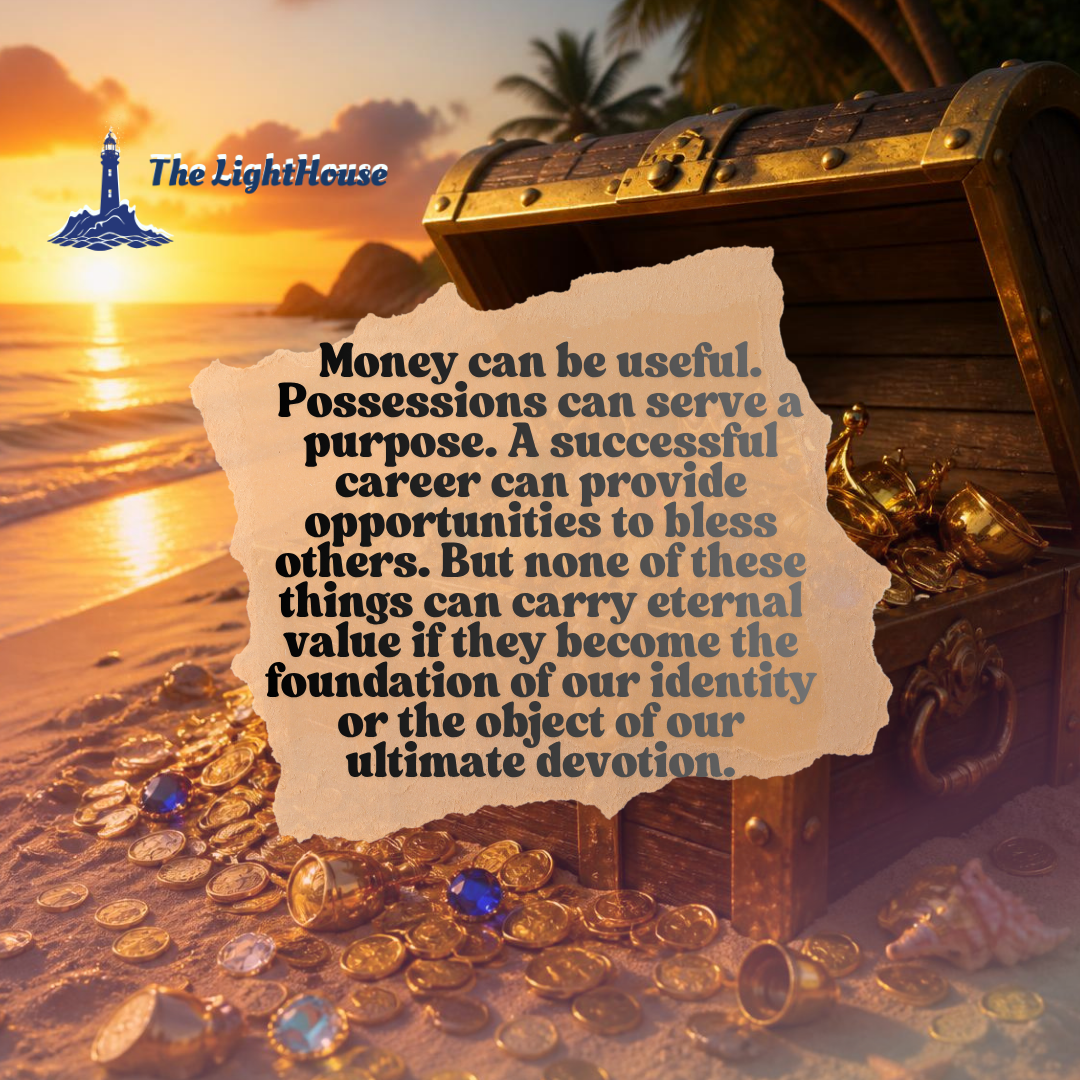
Money can be useful. Possessions can serve a purpose. A successful career can provide opportunities to bless others. But none of these things can carry eternal value if they become the foundation of our identity or the object of our ultimate devotion.
Our investments reveal our priorities. Consider some of the questions this raises:
- Where do I spend most of my time and attention?
- What am I most afraid of losing?
- What gives me the greatest sense of identity or importance?
- What am I continually pursuing?
- What am I willing to sacrifice for?
- Where do I place my security when life becomes uncertain?
The answer to these questions can reveal things about our hearts that we might otherwise overlook.
A person may say they are looking forward to eternity, yet their entire life may be consumed by temporary things. They may speak about God’s kingdom but invest all their energy in building a kingdom of their own.
Jesus challenges us to look beyond what is immediately visible.
Our earthly lives are temporary. There will come a moment when possessions, status and achievements can no longer benefit us. At death, everything we accumulated remains behind. The things we worked so hard to possess cannot accompany us into eternity.
That does not mean our earthly lives are meaningless. Quite the opposite. What we do with our lives now matters because our choices reveal what we value and have eternal consequences.
Jesus illustrated this truth through the account of the rich man and Lazarus in Luke 16:19-31. The rich man lived in luxury while Lazarus suffered at his gate. After death, their circumstances were dramatically reversed. The rich man’s earthly wealth could do nothing for him.
The point is not that being wealthy automatically condemns someone. Nor is Lazarus presented as being saved simply because he was poor. Rather, the account exposes the danger of living for earthly comfort while remaining indifferent to God and others.
The rich man’s wealth had become part of a life centred on himself; his treasure revealed his heart.
This is why Jesus warns us not to confuse temporary success with eternal significance.
Store Up Treasure That Lasts
Jesus’ answer is not simply, “Stop valuing earthly things.” His instruction is to store up treasure in heaven.
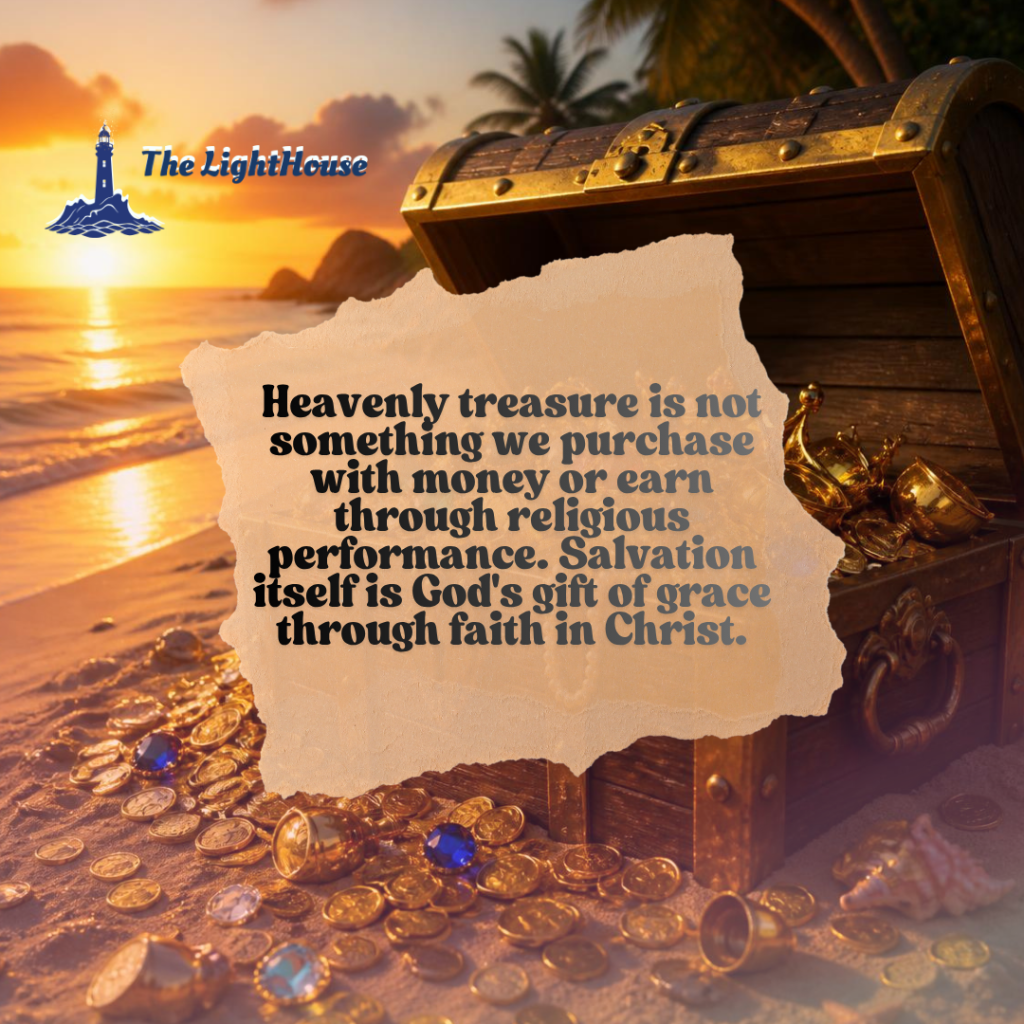
Heavenly treasure is not something we purchase with money or earn through religious performance. Salvation itself is God’s gift of grace through faith in Christ.
Rather, Jesus calls His followers to invest their lives in things that belong to God’s kingdom.
When our treasure is in heaven, our earthly decisions begin to look different. We start asking not only, “What will benefit me?” but also, “How can this honour God?”
We begin to see our resources as something entrusted to us rather than something we own absolutely.
Time becomes an opportunity to serve, possessions become opportunities to give, influence becomes an opportunity to encourage others, abilities become opportunities to serve God’s purposes and relationships become opportunities to demonstrate the love of Christ.
In this sense, we store up treasure in heaven when we make earthly choices that have eternal value.
Jesus later says to “Seek first his kingdom and his righteousness.”That is the heart of heavenly treasure. It means God’s kingdom becomes our priority.
This does not mean neglecting work, family, responsibilities or legitimate enjoyment. It means placing them in their proper order. We can work diligently without making our career our identity, enjoy possessions without allowing possessions to possess us, and pursue excellence without making achievement our god.
Paul gives a similar perspective in Colossians 3:1-2:
“Set your hearts on things above, where Christ is, seated at the right hand of God. Set your minds on things above, not on earthly things.”
The Christian is called to live with an eternal perspective that changes how we:
- see success.
- respond to loss.
- give.
Paul demonstrated this when he spoke about the things he had once considered valuable. In Philippians 3:7-8, he counted them as loss because of the surpassing worth of knowing Christ.
Christ had become his treasure.
That is ultimately where Jesus is leading us.
The goal is not simply to become less attached to money. It is to become more deeply attached to Christ.
When Christ is our greatest treasure, everything else finds its proper place.
Conclusion
Where your treasure lies reveals where your heart is.
Jesus’ words in Matthew 6:21 challenge us to examine more than our bank accounts. They challenge us to examine our priorities, desires, ambitions and loyalties.
Earthly treasure is temporary. It can be lost, destroyed or left behind, however, heavenly treasure has eternal value.
This does not mean that Christians must reject wealth or possessions. It means we must refuse to allow them to become our master.
As believers, our greatest treasure is not found in what we can accumulate. Our greatest treasure is Christ Himself.
When we treasure Him, our lives begin to reflect His priorities. We become more willing to give, serve, obey, love and invest in what lasts.
Our passions follow our investments.
So, invest wisely, build for eternity, and seek God’s kingdom.