
In a world filled with different beliefs, opinions and ideas about how to find God, one question remains important: who truly provides the way to eternal life? Jesus gives a clear answer in John 14:6: “I am the way, the truth, and the life: no man cometh unto the Father, but by me.”
These words are more than a statement of belief; they reveal the very foundation of the Christian faith. Jesus did not describe Himself as one of many ways to God. He declared that He is THE Way. Understanding this means looking beyond His teachings and miracles to recognise His identity, His purpose and what He accomplished through His death and resurrection.
Who Jesus Is: More Than a Teacher or Prophet

To understand why Jesus is the only way to salvation, we must first understand who He is. Jesus was not simply a good man who lived an extraordinary life. He is the Son of God, sent into the world to reconcile humanity to the Father.
His identity was established long before His earthly ministry. In Genesis 3:15, God promised that the offspring of the woman would ultimately defeat the serpent. This points towards God’s plan of redemption, fulfilled through Jesus Christ. Hebrews 1:1-2 explains that although God spoke through the prophets in the past, He has now spoken through His Son.
Jesus’ life and words further reveal His divine identity:
- He was born of a virgin: Matthew 1:21-23 records the angel’s announcement that Mary would give birth to a son, who would be called Jesus because He would save His people from their sins.
- He lived without sin: 1 Peter 2:22-23 confirms that He committed no sin, nor was deceit found in His mouth. Unlike humanity, Jesus was without sin and therefore uniquely qualified to be the perfect sacrifice for sin.
- He declared His eternal identity: In John 8:58, Jesus said, “Before Abraham was, I am.” He was not claiming to be merely another messenger; He was revealing His divine identity.
- He demonstrated authority over sin: In Matthew 9:2-6, Jesus forgave the sins of a paralysed man and healed him, demonstrating that He had authority to forgive sins.
His miracles also demonstrated His power and compassion. He healed the sick, restored sight to the blind, calmed storms and even raised the dead. These were not simply extraordinary acts; they pointed to who He was and the authority He carried.
Jesus is THE Way because of His identity, His sinless life and His unique authority to save.
What Jesus Did: The Way to Salvation
Knowing who Jesus is must lead us to understand why He came. Humanity’s problem is not simply a lack of direction or good behaviour; it is sin, which separates us from God. From the beginning, God had a plan to restore that broken relationship.
God is loving, but He is also just. His love does not mean that sin is overlooked, and His justice does not mean that humanity is without hope. Through Jesus, God made a way for sin to be dealt with and for people to be reconciled to Him.
Consider what Jesus accomplished:
- He died for our sins: Jesus willingly gave His life on the cross, taking the punishment for sin so that we could receive forgiveness and reconciliation with God (Romans 5:8).
- He defeated death: Jesus did not remain in the grave. Romans 6:9 declares that Christ, having been raised from the dead, will never die again; death no longer has dominion over Him. His resurrection gives believers the hope of eternal life.
- He offers salvation to everyone who believes: Acts 4:12 makes it clear that salvation is found in no one else, for there is no other name under heaven given to man by which we must be saved.
This is why Jesus’ declaration in John 14:6 matters so much. He is not merely showing us a route; He is the way through which we can come to the Father. His death and resurrection accomplished what human effort, religious activity and good works could never achieve.
God’s love is extended to man, yet people are still free to accept or reject Him. Turning away from the One who offers forgiveness and eternal life does not diminish God’s love; it means missing the life He has made available through Christ. His invitation remains open.
And it does not end with the resurrection. Jesus promised that He would return (John 14:3). His return reminds us that our faith is not only about what He has done, but also about the hope of what is yet to come.
Conclusion
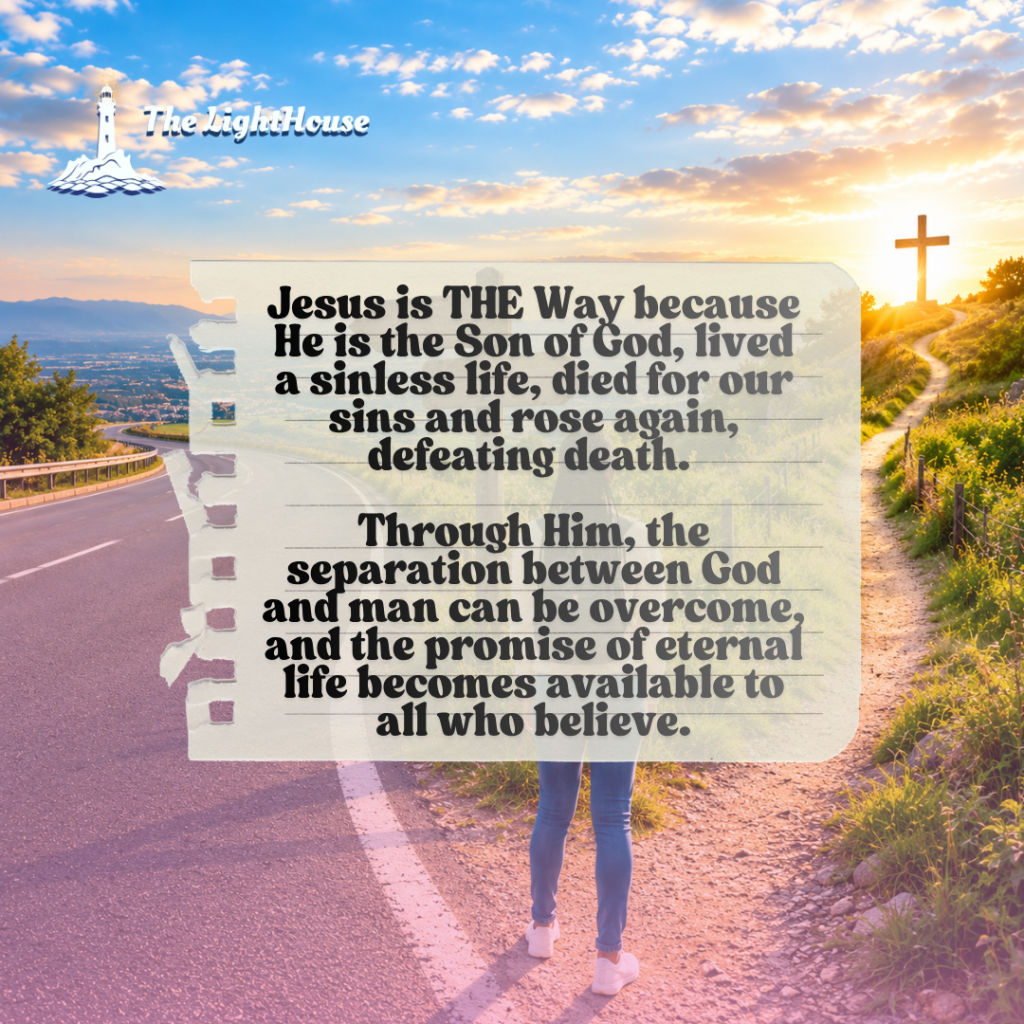
Jesus is THE Way because He is the Son of God, lived a sinless life, died for our sins and rose again, defeating death. Through Him, the separation between God and man can be overcome, and the promise of eternal life becomes available to all who believe.
The question is not simply whether we know about Jesus, but whether we have accepted Him. We can admire His miracles, quote His word and recognise His goodness, yet still miss the most important part: having a personal relationship with Him.
There are many voices offering different directions, but Jesus’ words remain unchanged: He is the Way, the Truth and the Life. The invitation is there. The way has been made.
Will you follow Him?